
Greenhouses
Advisory & Design for Climate-Controlled Agricultural Infrastructure
Choosing the right greenhouse infrastructure is a strategic decision that directly impacts crop performance, climate stability, and long-term profitability. A greenhouse is not simply a structure but is a controlled growing environment designed around plant physiology and environmental precision.
At AgriTech LLC, we provide professional greenhouse advisory and design consulting to help growers and investors select the most appropriate greenhouse system based on climate conditions, crop sensitivity, operational goals, and capital budget.
Our objective is simple: educate you to make the right infrastructure decision before investing.
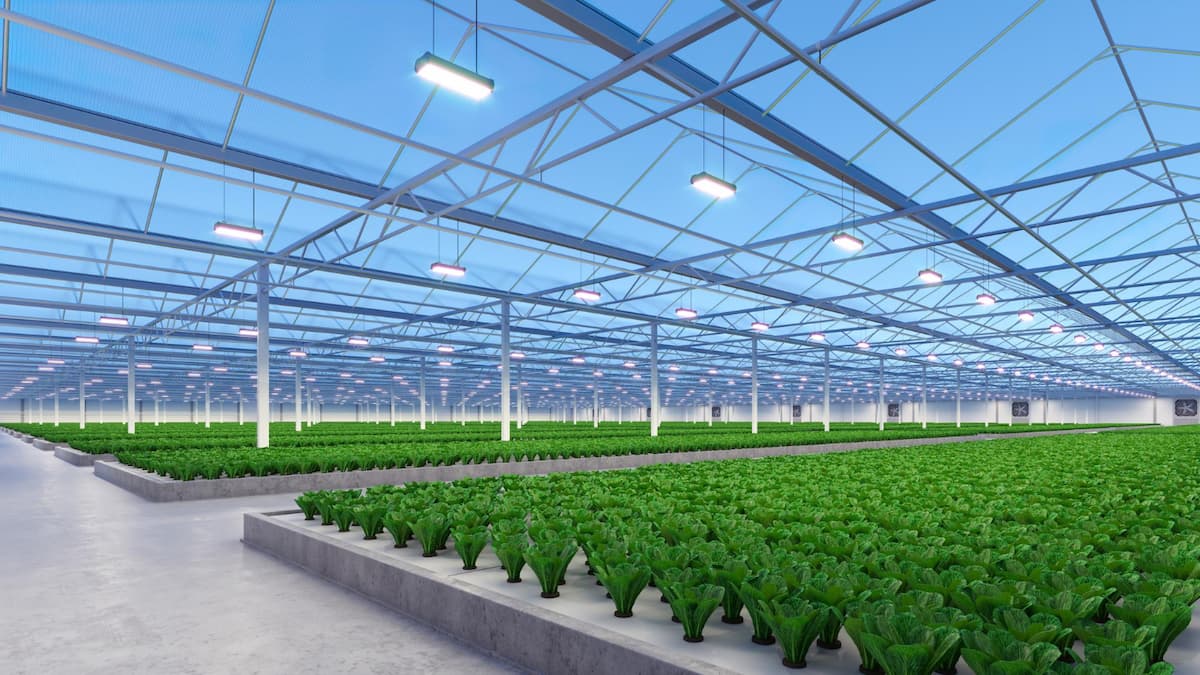
Understanding Greenhouse Technology Levels
Matching Climate Control with Investment Strategy
Greenhouses are typically classified into three categories: Low-Tech, Mid-Tech, and High-Tech systems. Each level provides a different degree of environmental control and automation.
Selecting the right level depends on your regional climate variability, humidity conditions, crop type, and required production stability.
Low-Tech Greenhouses
Poly-Tunnels & Natural Ventilation
Low-tech greenhouse systems rely primarily on passive environmental control. These structures typically use poly-film coverings and natural ventilation to regulate internal conditions.
- Poly-film greenhouse coverings
- Natural ventilation openings for airflow
- Basic irrigation systems
- Minimal automation
- Regions with mild and stable climates
- Areas with limited extreme weather events
- Entry-level agricultural operations
- Growers seeking lower initial investment
- Basic humidity control
- Seasonal fluctuations in crop performance
- Reduced climate stability during extreme weather
Mid-Tech Greenhouses
Automated Cooling & Climate Assistance
Mid-tech greenhouse systems introduce partial automation to improve environmental stability and crop performance.
These systems combine passive greenhouse structures with automated environmental control components.
- Automated ventilation systems
- Evaporative cooling equipment
- Shading and thermal screen systems
- Environmental monitoring sensors
- Improved temperature regulation
- More stable humidity management
- Greater control over crop conditions
- Increased yield consistency
- Regions with moderate climate variability
- Growers seeking improved environmental stability
- Agricultural operations balancing performance with cost
High-Tech Greenhouses
Fully Glass, Climate-Integrated Systems
High-tech greenhouse systems represent the most advanced form of controlled-environment agriculture infrastructure.
These facilities are typically fully glass structures equipped with integrated environmental control technologies designed to maintain optimal growing conditions year-round.
- HVAC climate control systems
- Automated humidity regulation
- CO₂ enrichment systems
- Precision irrigation and fertigation
- Centralized climate monitoring platforms
- Highly stable temperature control
- Precise humidity and airflow management
- Year-round crop production
- Consistent yield performance
- Greater production reliability
- Long-term operational scalability
- Higher-value crop production potential
Greenhouse Comparison Guide
Decision Matrix for Infrastructure Selection
The table below provides a simplified overview to support infrastructure planning:
| Factor | Low-Tech | Mid-Tech | High-Tech |
|---|---|---|---|
| Climate Suitability | Mild climates | Moderate variability | All climates |
| Capital Investment | Low | Medium | High |
| Automation Level | Minimal | Partial | Fully Integrated |
| Environmental Precision | Limited | Moderate | Advanced |
| Yield Stability | Seasonal | Improved Stability | High Consistency |
| Scalability | Limited | Expandable | Fully Scalable |
This comparison is a starting point. Final decisions should always be based on detailed feasibility analysis and climate data evaluation.
Advisory & Design Approach
Identify the Best Technology for Your Specific Project Conditions
At AgriTech LLC, greenhouse advisory is driven by plant health, climate engineering, and operational logic.
We analyze local climate data, crop physiology, humidity sensitivity, energy infrastructure, and long-term scalability requirements before recommending a greenhouse solution. Our approach ensures that the selected infrastructure aligns with both environmental realities and financial objectives.
Rather than overspecifying technology or underestimating climate risk, we engineer the right level of control for your specific project conditions.
Why Professional Greenhouse Consulting Matters
- Selecting the wrong greenhouse infrastructure can result in excessive energy consumption, poor humidity control, inconsistent yields, and reduced return on investment.
- A properly designed greenhouse improves environmental stability, protects plant health, optimizes resource efficiency, and supports long-term profitability.
- Infrastructure decisions made during planning determine operational success for years to come.
Planning a greenhouse project?
Let AgriTech evaluate your climate conditions, crop strategy, and investment goals to recommend the most suitable greenhouse infrastructure for your operation.